What PPF Coverage Should You Choose for Your Vehicle?

Most people don’t struggle with whether to get PPF—they struggle with how much coverage they actually need.

Go too light, and you leave your vehicle exposed.
Go too far, and you spend more than necessary.

Most drivers in Arizona choose full front coverage for the best balance of protection and cost.

Partial front works for lighter use, while full wraps are ideal for high-end vehicles or long-term ownership.

Your 3 Main PPF Coverage Options

When it comes to PPF, you’re not choosing from dozens of options.

It really comes down to three levels of coverage—each with a different balance of protection, cost, and long-term value.
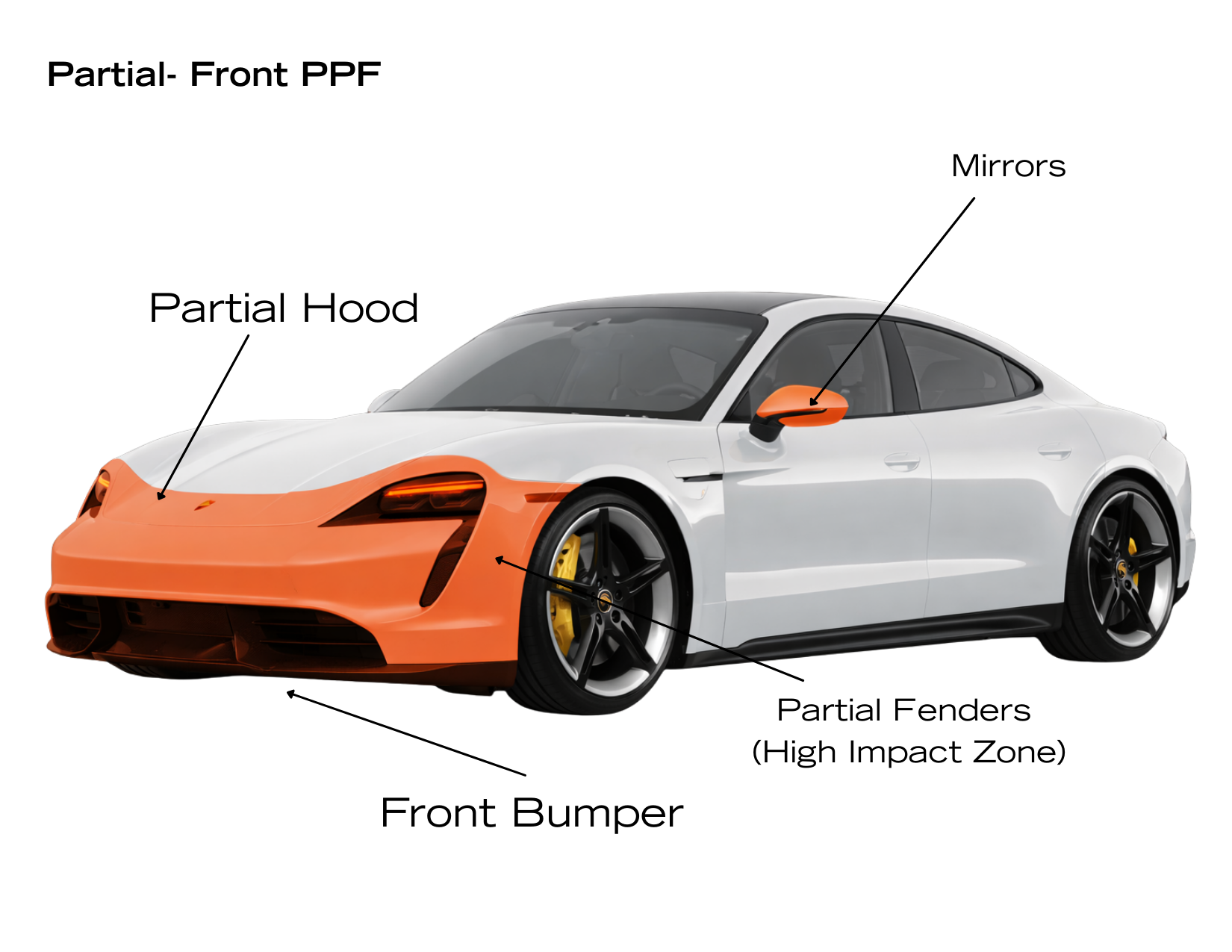
Partial front PPF coverage diagram showing hood bumper fenders and mirrors protected on vehicle

Partial Front Protection


Covers the most exposed areas of the vehicle, such as portions of the hood, fenders, and front bumper.

This option is typically chosen for basic protection at a lower cost.

Lower cost—but leaves some high-impact areas exposed.

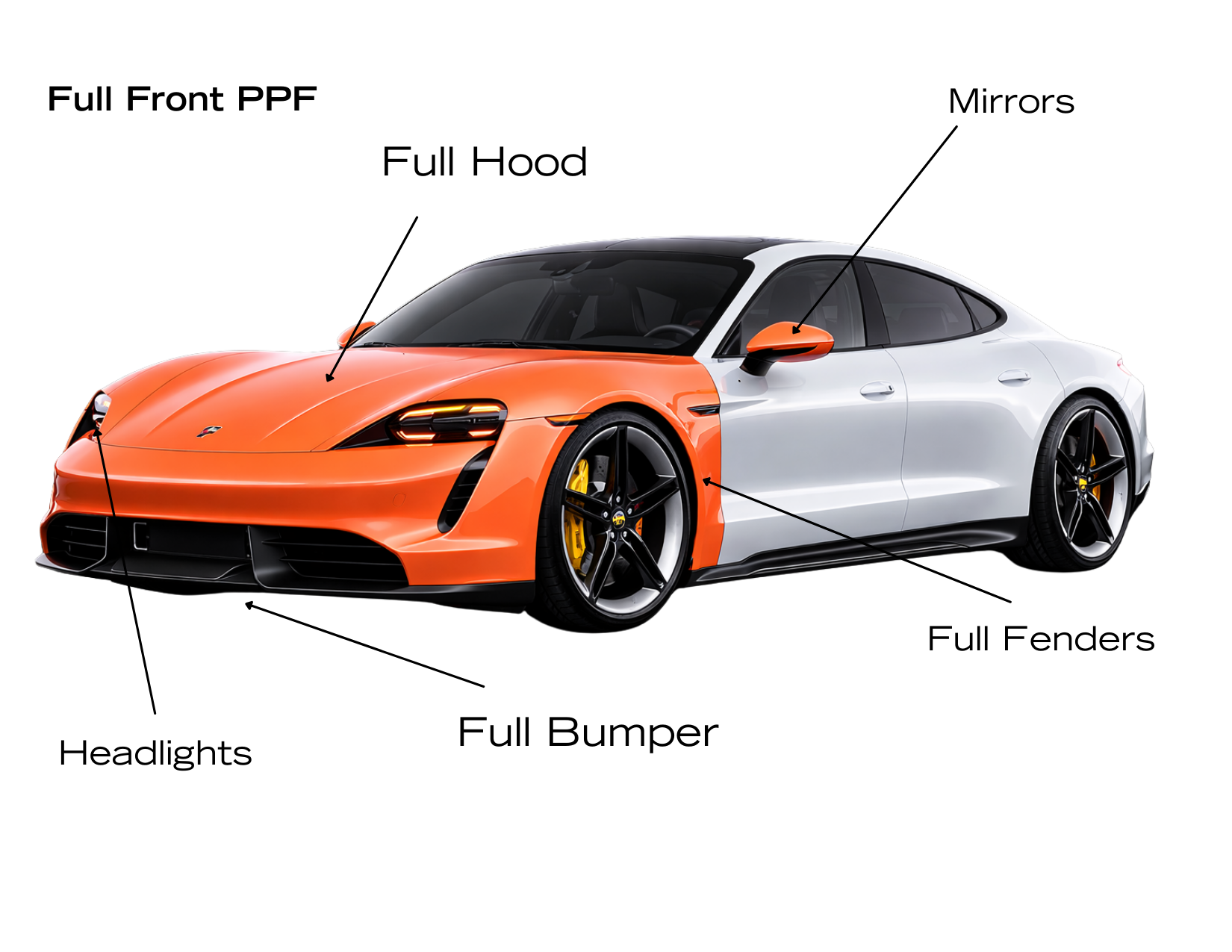
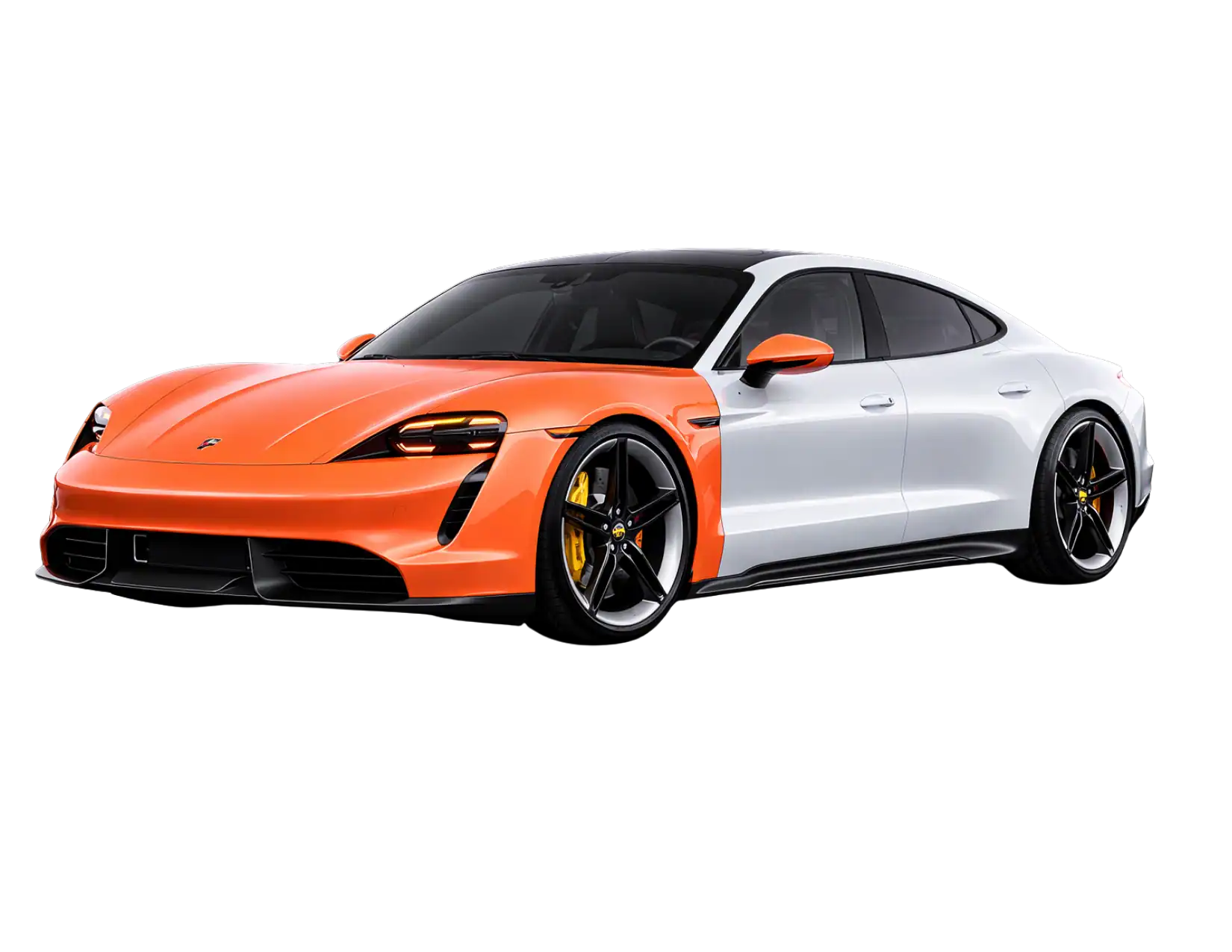
Full front PPF coverage on car showing full hood bumper fenders and mirrors with seamless protection

Full Front Protection


Covers the full hood, full fenders, bumper, and often mirrors—protecting the areas that take the most abuse from road debris and daily driving.

This is the most popular option for Arizona drivers.

The best balance of protection, appearance, and cost.

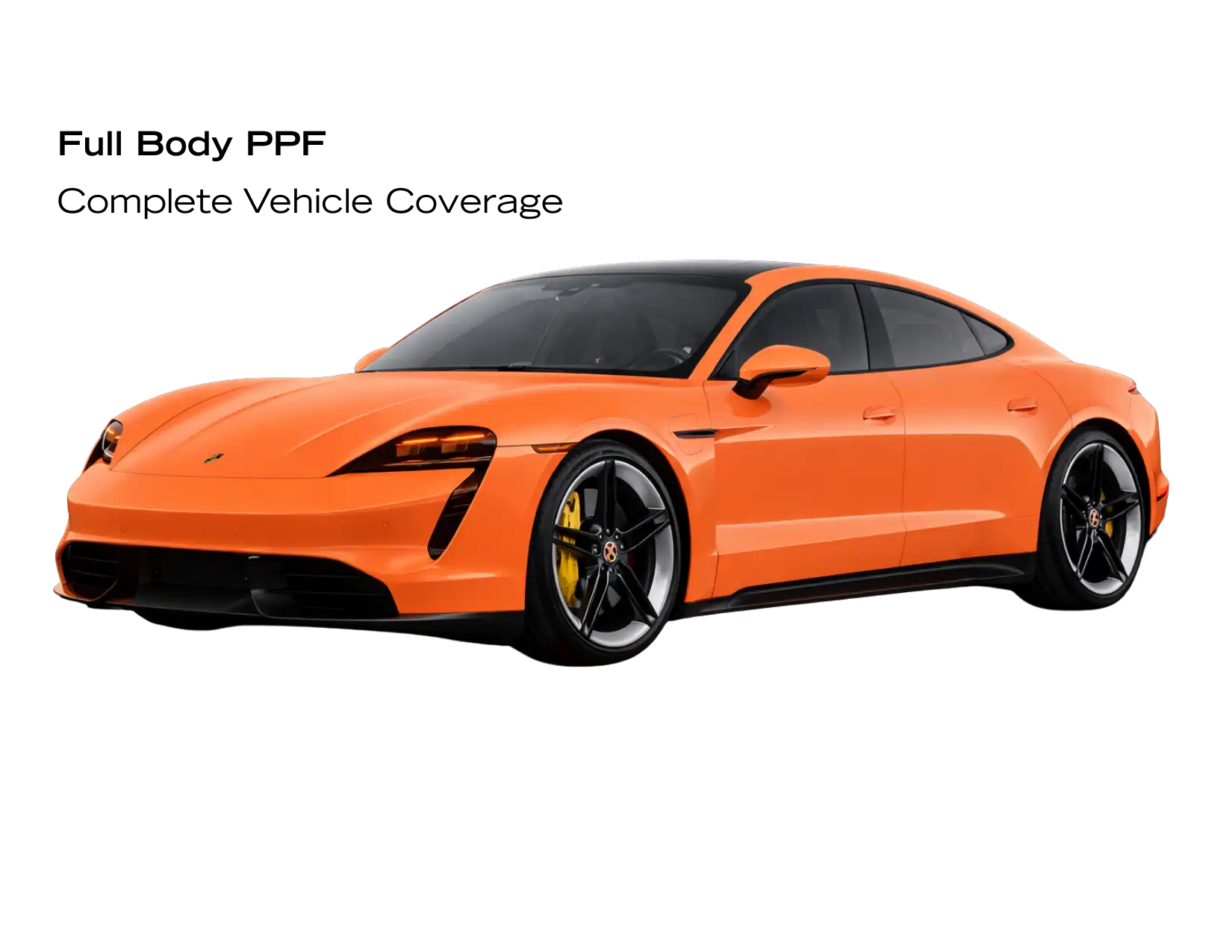
Full body PPF wrap on car providing complete paint protection across entire vehicle with seamless finish

Full Vehicle Protection


Covers the entire vehicle with PPF, providing maximum protection against chips, scratches, and environmental damage.

Ideal for high-end vehicles or long-term ownership.

Maximum protection—but at a higher investment.

Most Arizona drivers choose full front protection—it covers where damage actually happens without paying for areas that rarely see impact.

Tesla owners often choose different coverage levels due to softer paint and Arizona heat.
👉 See our guide to the best PPF coverage for Tesla in Arizona.

Which PPF Coverage Is Right for You?

The right PPF coverage depends less on the car—and more on how you use it.

In Arizona, heat, road debris, and daily driving habits all play a role in how much protection actually makes sense.
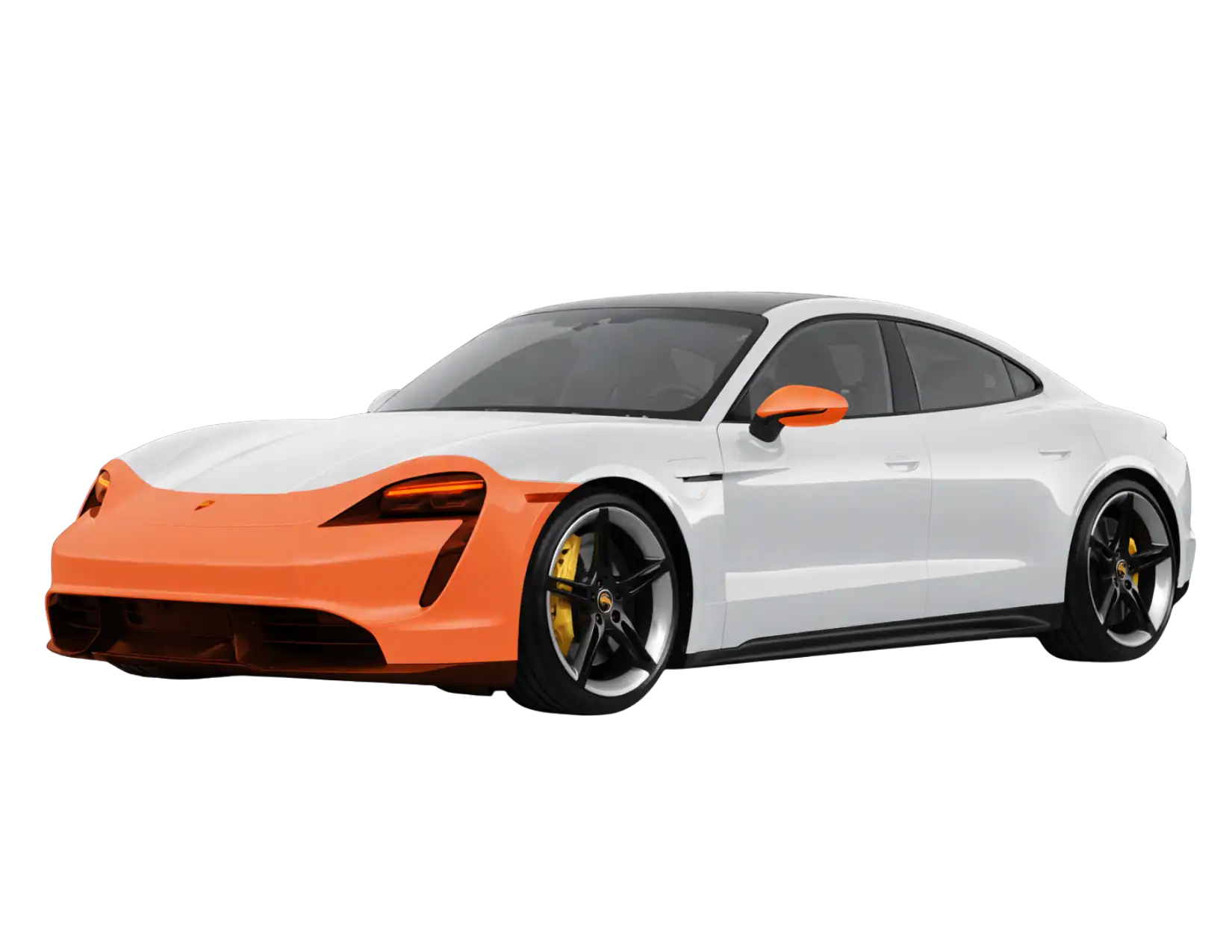
Partial front paint protection film on car covering hood bumper and front fenders for rock chip protection

BASIC PROTECTION

Choose Partial Front Protection If:


  • You drive mostly short distances
  • Your vehicle is garage-kept most of the time
  • You want basic protection without a large investment

Partial coverage works for lighter use—but it leaves some high-impact areas exposed over time.


Full front paint protection film on car covering full hood bumper fenders and mirrors for maximum front-end protection

MOST POPULAR

Choose Full Front Protection If:


  • You drive regularly, especially on highways
  • Your vehicle is exposed to Arizona sun and road debris
  • You want strong protection without going all-in

For most Arizona drivers, full front coverage offers the best balance of protection and cost.

Full body paint protection film wrap on car covering entire vehicle for complete protection from scratches chips and damage

MAXIMUM COVERAGE

Choose Full Vehicle Protection If:


  • You want maximum protection
  • across the entire vehicle
  • You own a high-end or custom-finish vehicle
  • You plan to keep your vehicle long-term

Full wraps eliminate nearly all exposed paint—but come with a higher investment.

The more your vehicle is exposed to heat, sunlight, and daily driving, the more coverage makes sense.

If you’re not sure what fits your situation, we’ll look at your vehicle and how you drive—and recommend the right level of protection without overdoing it.

Frequently Asked Questions About PPF Coverage

Most drivers choose full front protection because it covers the areas that take the most damage from road debris and daily driving—without the cost of a full wrap.

Full vehicle protection is worth it for high-end vehicles, custom finishes, or long-term ownership. It provides the most complete protection, but it’s a larger investment.

Partial front protection can work for light use or garage-kept vehicles, but it leaves some high-impact areas exposed. Over time, those exposed sections can still show wear.

Not exactly. More coverage protects more surface area, but lifespan still depends on film quality, installation, and how the vehicle is exposed to heat and sunlight.

In most cases, upgrading later means removing and replacing sections of film. It’s usually more cost-effective to choose the right level of coverage from the start.

Yes. Vehicles with well-maintained paint and protection tend to hold value better, especially in harsh environments like Arizona where paint damage happens faster.

With proper installation, edges are minimal and often wrapped or hidden. Poor installation is usually what makes edges noticeable—not the film itself.

It depends on how you drive, where you park, and how long you plan to keep your vehicle. A quick evaluation can help determine the right balance of protection and cost.

Still not sure what makes sense for your vehicle? We’ll take a look and give you a clear recommendation—no pressure.


*Include vehicle make, model, and year in the message box below.

By checking the box below and clicking SUBMIT, you consent to receive SMS text messages from Clear Cut Glass & Tint regarding your quote request, appointment reminders, service updates, and promotional offers.  Message fBy checking the box below and clicking SUBMIT, you consent to receive SMS text messages from Clear Cut Glass & Tint regarding your quote request, appointment reminders, service updates, and promotional offers.  Message frequency varies.  Message and data rates may apply.  Consent is not a condition of purchase.  Reply STOP or END to opt out at any time. 

By submitting this form, you agree to our Privacy Policy and Terms & Conditions.