
Pre-Cut vs. Hand-Cut PPF: Which Installation Is Better?
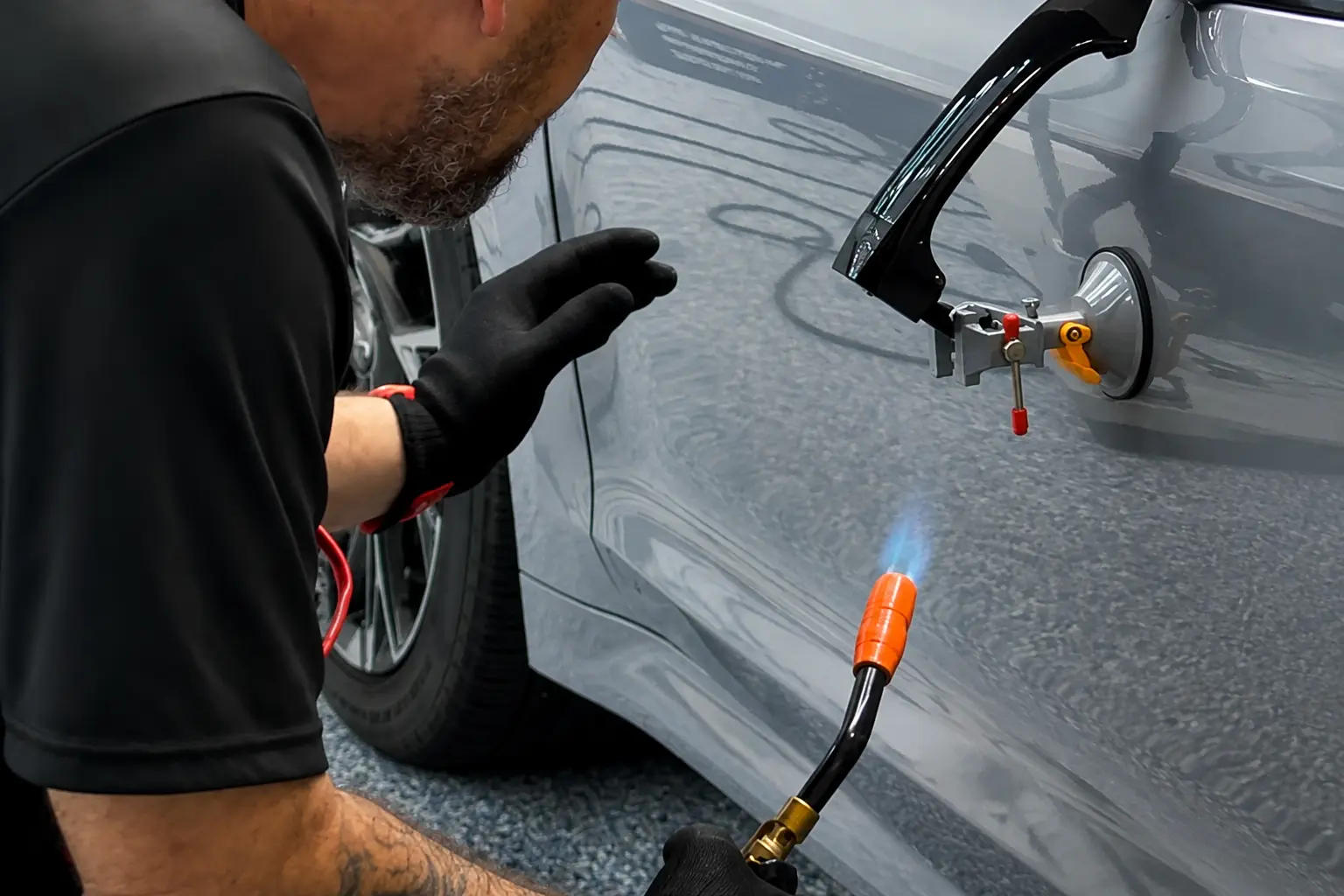
Neither method is automatically better. Pre-cut patterns provide precision and reduce the need for a blade near the vehicle, while hand-cutting gives an experienced installer more flexibility in areas where a standard pattern may not provide the coverage or finish they want. The best PPF installations often use a combination of both.
Pre-Cut vs. Hand-Cut: What’s the Difference?
PRE-CUT PPF
Vehicle-specific software sends a pattern to a plotter, which cuts the film before installation.
Best for: precision, repeatability and reducing blade work near the paint.
Visual: Your plotter room.
HAND-CUT PPF
Film is custom-fitted and trimmed by an experienced installer when a standard pattern isn’t the best solution.
Best for: complex curves, modified vehicles, custom areas and extended coverage.
Visual: Josh cutting/installing.
Sometimes the Pattern Isn’t the Whole Story
A digital pattern can tell an installer where to cut the film. It can’t make every decision about how that film should finish on a particular vehicle.
In some areas, getting cleaner coverage may mean modifying a pattern, hand-cutting part of the film or removing a piece of hardware so the film can extend behind it rather than stopping at the visible edge.
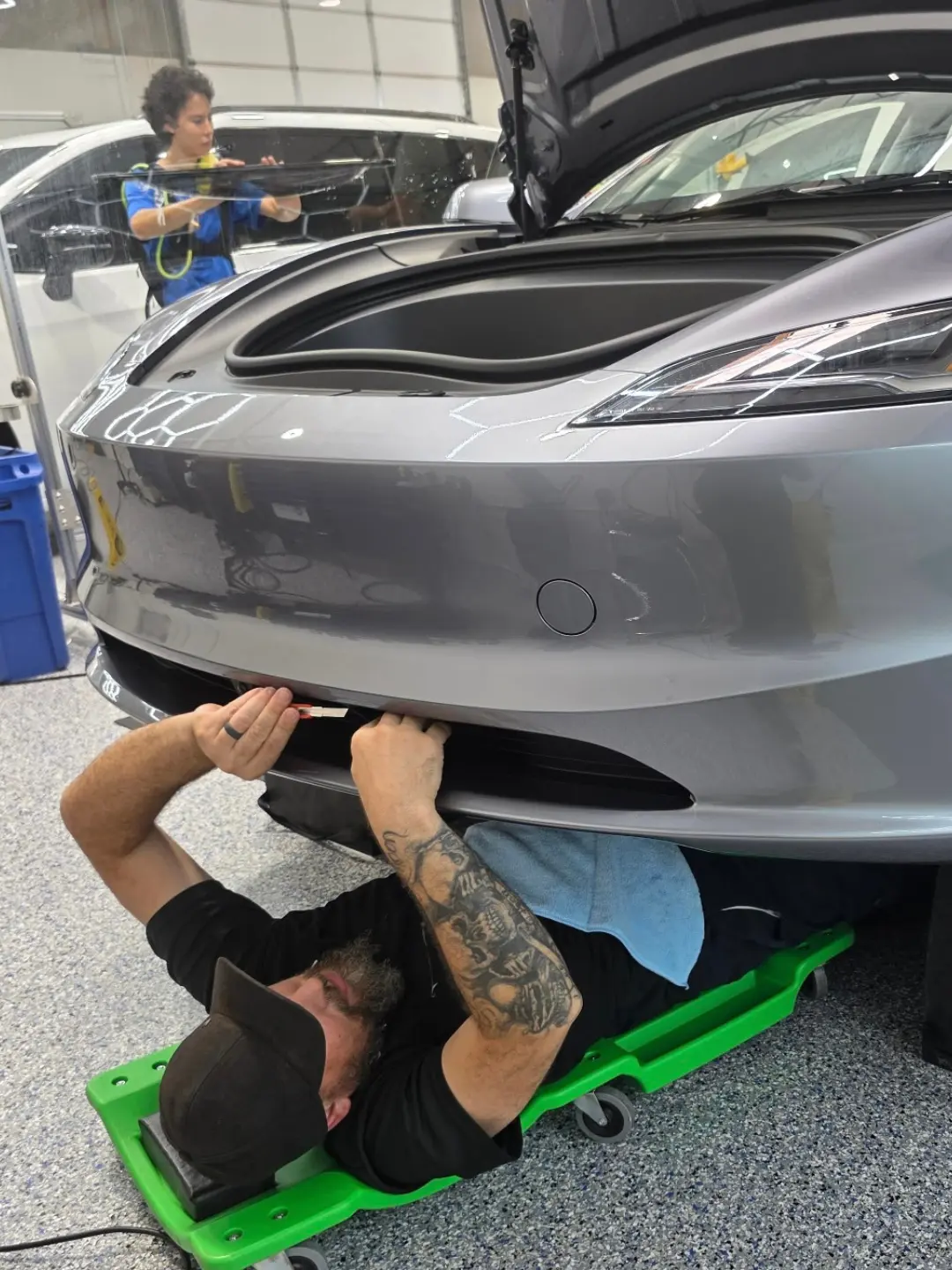
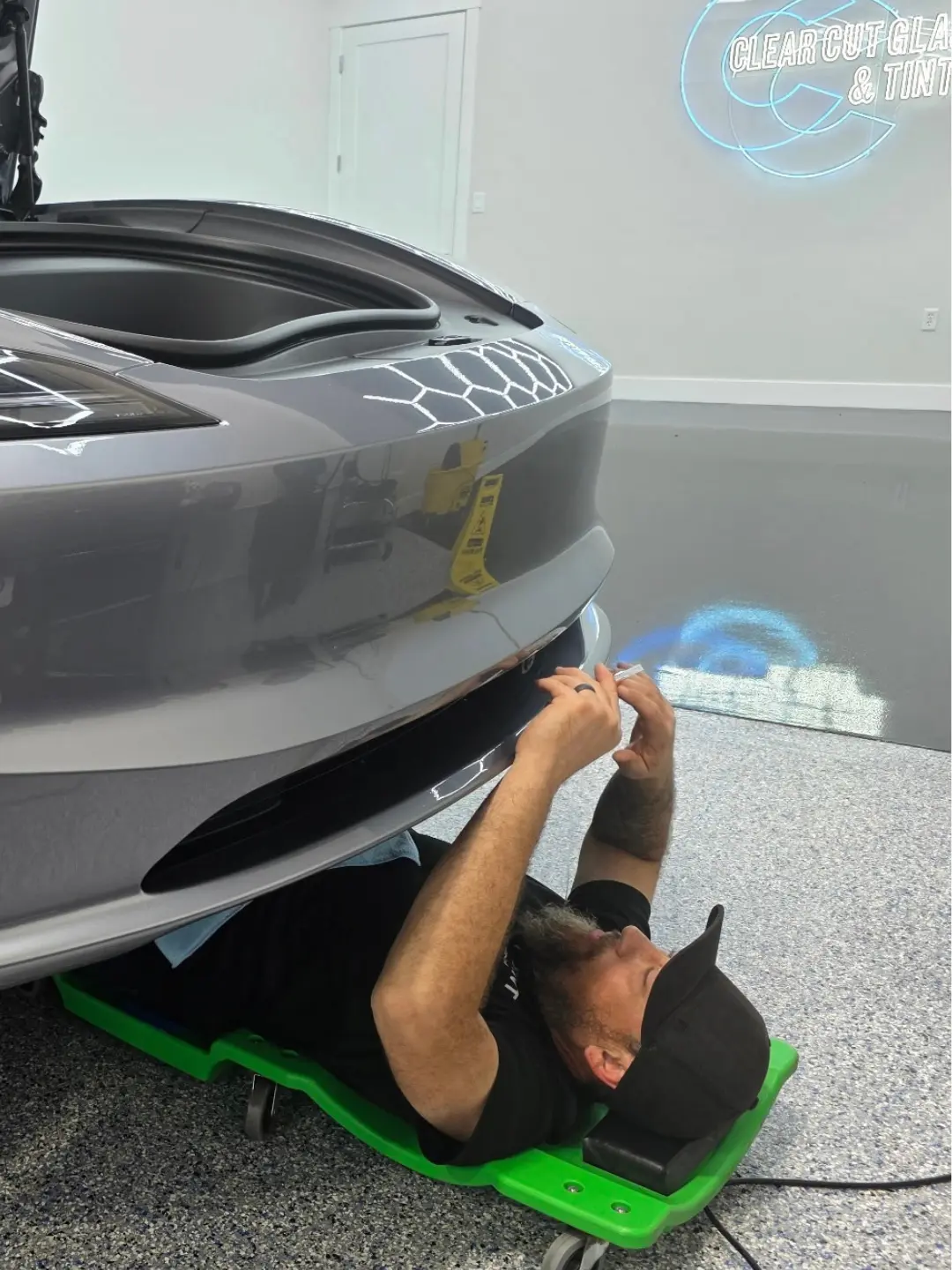
Custom PPF fitment in action: Working around the lower bumper requires careful positioning, trimming and edge work to fit the film around complex shapes and openings.
So Which PPF Installation Method Is Better?
For most vehicles, there’s no reason to choose a shop based solely on whether it uses pre-cut or hand-cut PPF.
Look for an installer who can use vehicle-specific patterns when they make sense, modify them when necessary and safely hand-cut or wrap difficult areas when the vehicle calls for it.
At Clear Cut, we use both. The method follows the vehicle, not the other way around.
Precision starts before the film reaches the vehicle. Our plotter cuts vehicle-specific PPF and window tint patterns, giving installers a precise starting point while still allowing for custom adjustments when needed.
The Film Matters. So Does the Installation.
A quality PPF installation should protect the paint without calling attention to the film itself. Clear Cut installs paint protection film for vehicles throughout Glendale and the Phoenix West Valley, using pre-cut patterns, custom fitting and wrapped edges where appropriate.
GET PPF PRICING
Want to understand coverage options first?
Explore our Paint Protection Film packages and installation process
Clear Cut Glass & Tint provides professional PPF installation in Glendale for drivers throughout Phoenix and the West Valley, including Peoria, Surprise, Goodyear, Avondale and surrounding communities.


Leave A Comment