
What Window Tint Percentage Should You Choose?
5%? 20%? 35%?
Most people pick based on what “looks good”—but in Arizona, that’s not the smartest way to decide.
Tint percentage affects:
– how much heat your car absorbs
– how well you can see at night
– how legal your vehicle is on the road
And choosing the wrong one can lead to poor visibility, discomfort, or even getting pulled over.
Not every tint percentage is legal on every vehicle. Review Arizona window tint laws before making your final decision.
In this guide, we’ll break down what tint percentages actually mean, how they perform in Arizona heat, and how to choose the right one for your vehicle.
What Do Window Tint Percentages Actually Mean?
Window tint percentages don’t refer to how much light is blocked—they refer to how much light is allowed through.
This is called Visible Light Transmission (VLT). The lower the percentage, the darker the tint. For example:
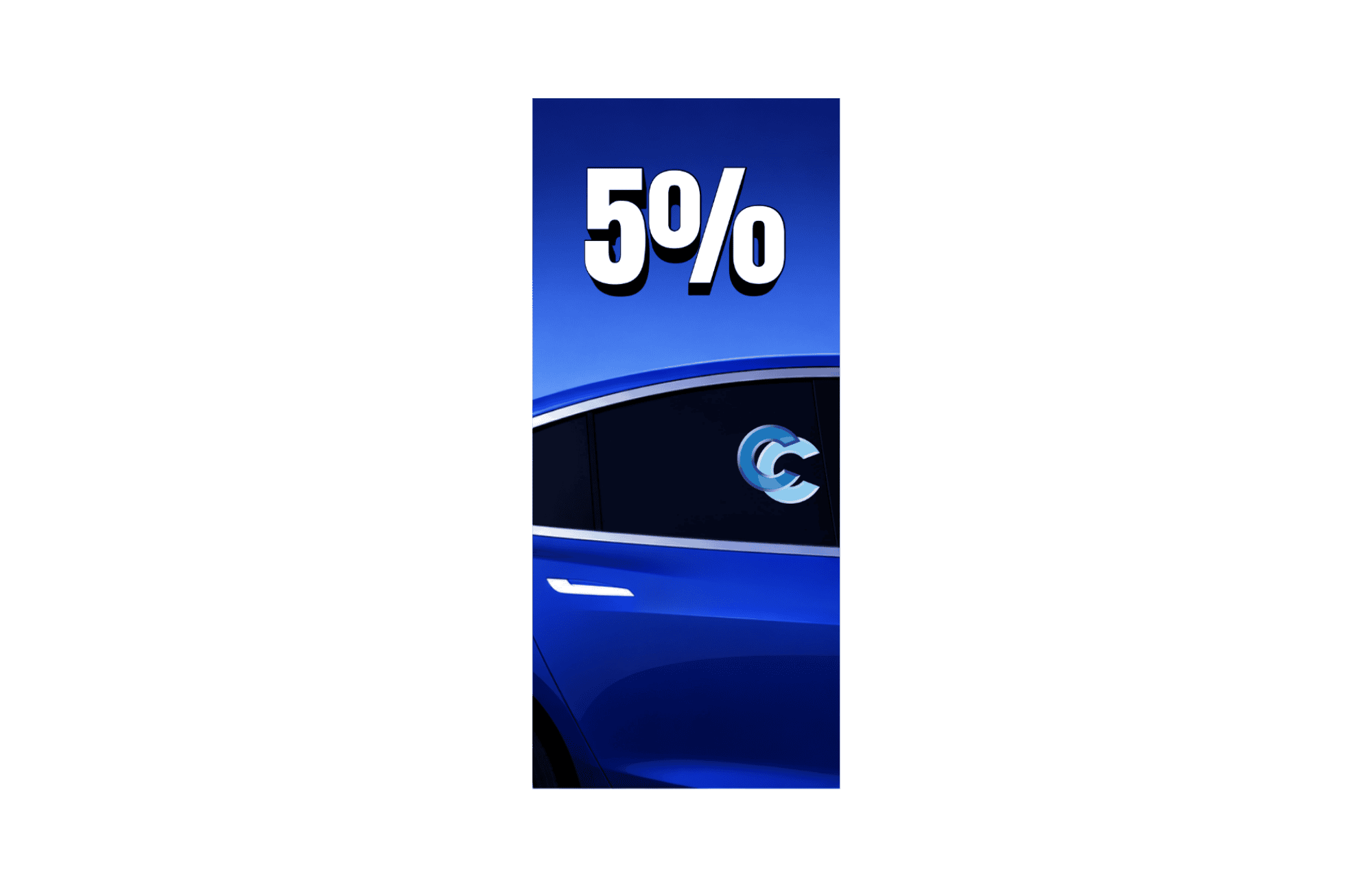
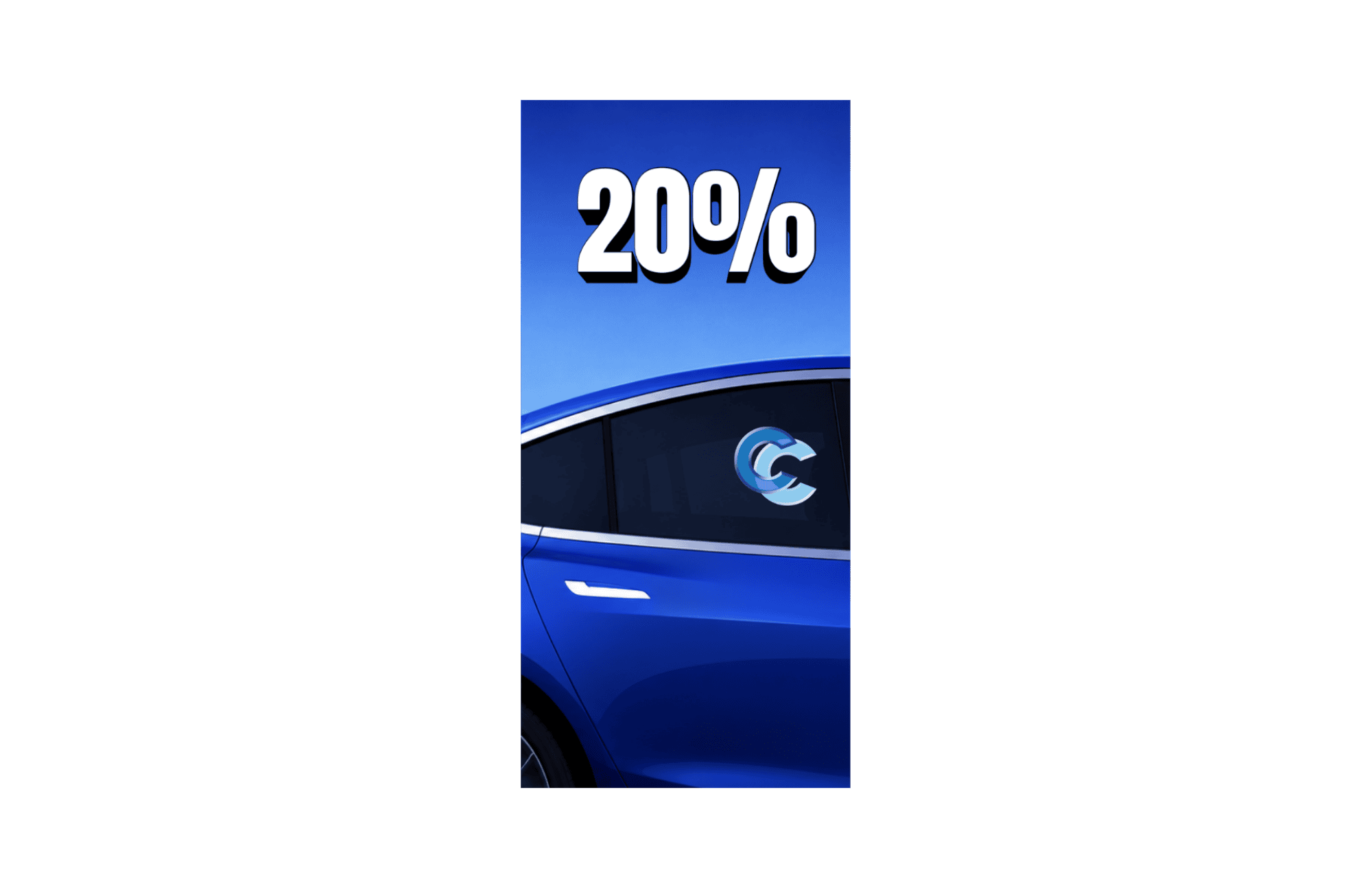
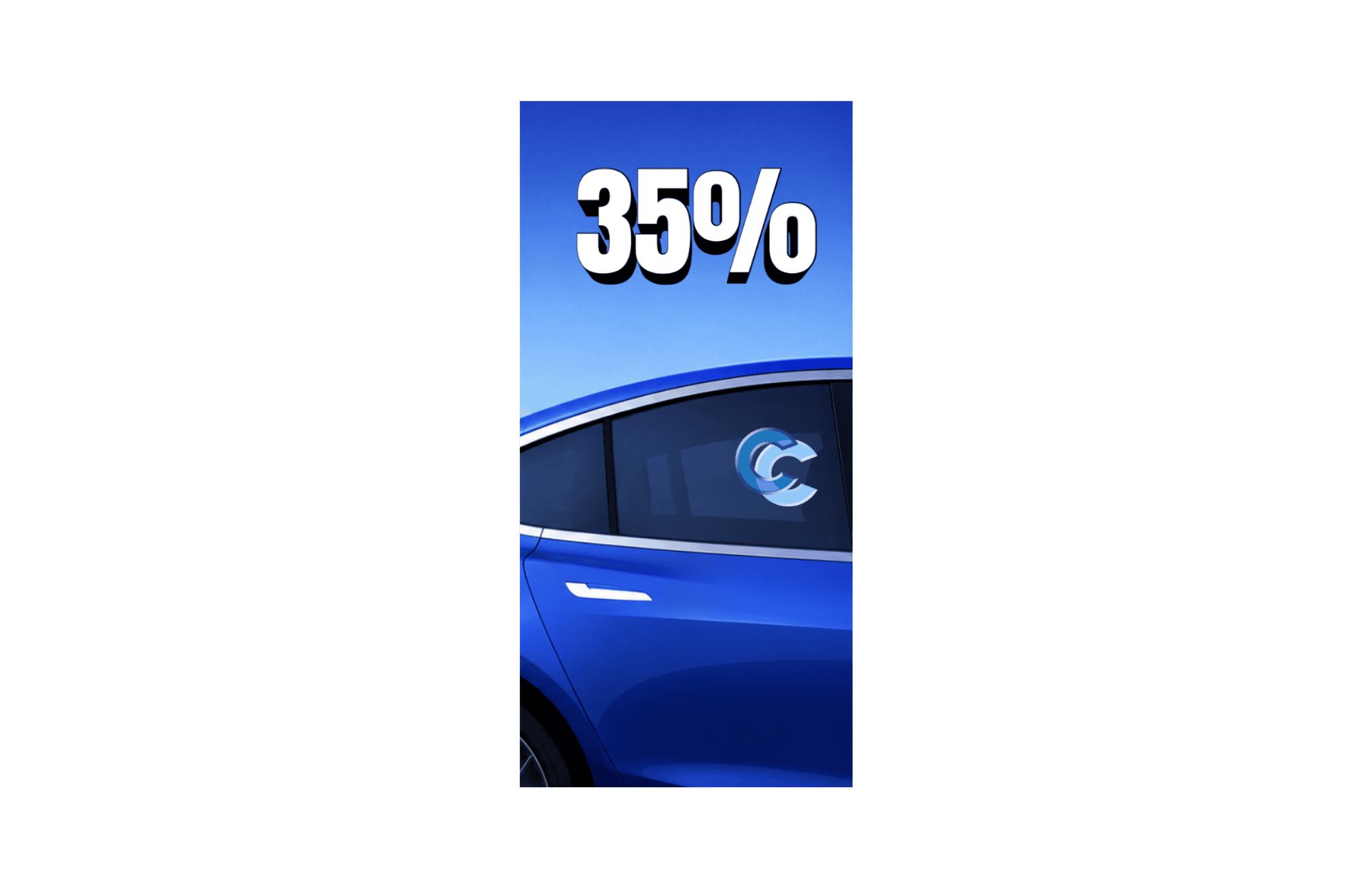
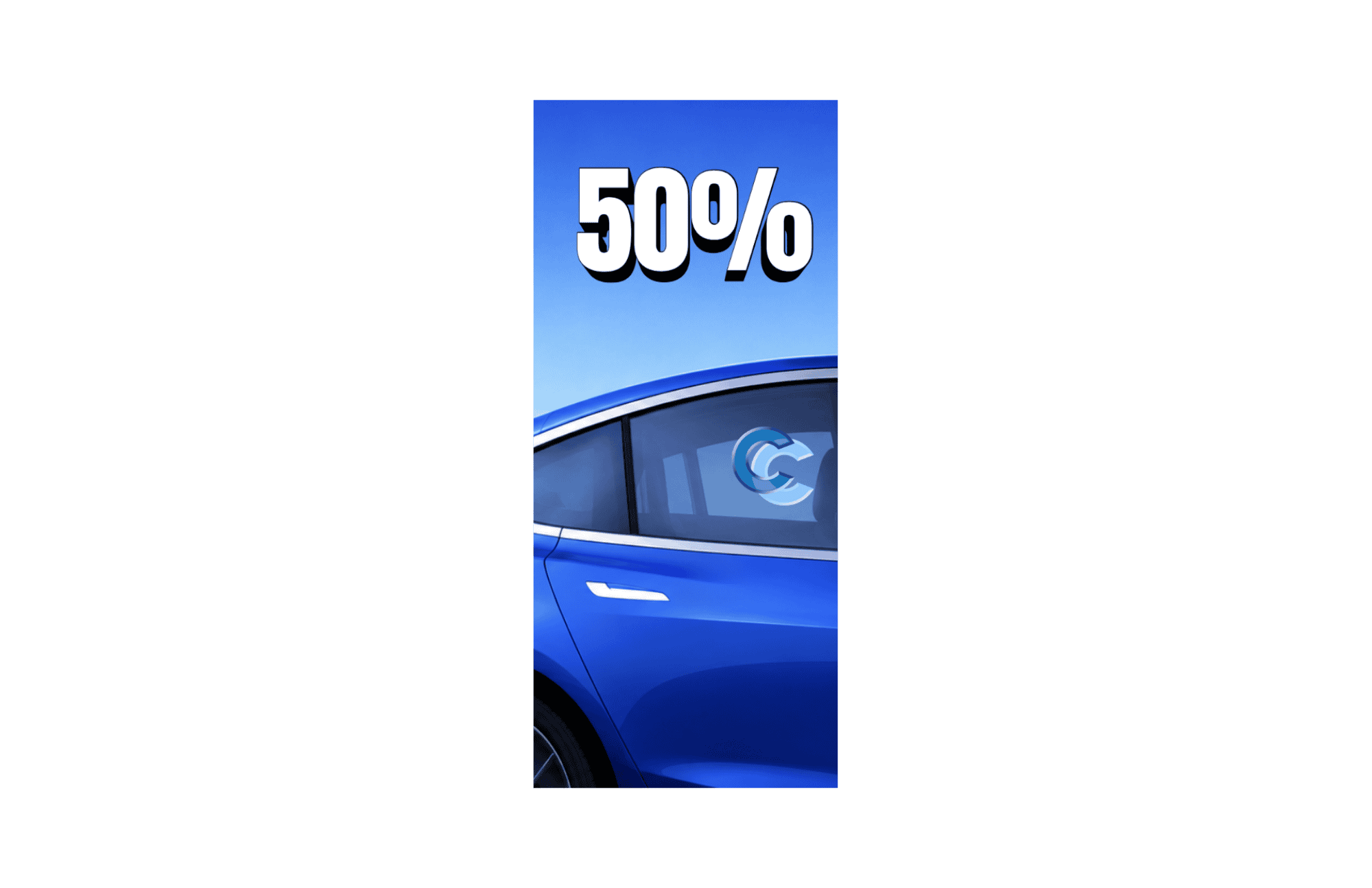
When you’re choosing a tint percentage, you’re really choosing how dark you want your windows—and 👉🏼 how much visibility and heat reduction you need.
What Different Tint Percentages Look Like
Understanding percentages is one thing—seeing how they actually perform is what makes the decision easier.
Here’s how the most common tint levels typically feel:
| Tint % | Description | Best for: | Keep in mind: |
|---|---|---|---|
| 5% Tint | (Limo Tint) Extremely dark. Offers maximum privacy and a bold look. |
• Rear windows • Drivers who want full privacy |
• Very limited visibility at night • Not legal on front windows in Arizona |
| 20% Tint | A popular middle ground between privacy and usability. | • Drivers who want a darker appearance • Increased privacy without going fully blacked out |
• Reduced visibility at night compared to lighter tints • Often used on rear windows with lighter front tint |
| 35% Tint | One of the most balanced options. | • Daily drivers • Good visibility while still reducing glare and heat |
• Less privacy than darker options • Often closer to legal limits for front windows |
| 50%+ Tint | Light tint focused more on performance than appearance. | • Windshields (where allowed) • Drivers who want heat rejection without a dark look |
• Minimal privacy • More about comfort than style |
The darkness percentage is only part of the equation when choosing window tint. The type of film you select also impacts heat rejection, glare reduction, clarity, and overall driving comfort.
To better understand the performance differences between film technologies, read our comparison of 👉🏼 ceramic vs standard window tint.
Phoenix AZ Window Tint Laws
Before choosing a tint percentage, it’s important to understand what’s legal in Arizona.
Here’s a simplified breakdown:
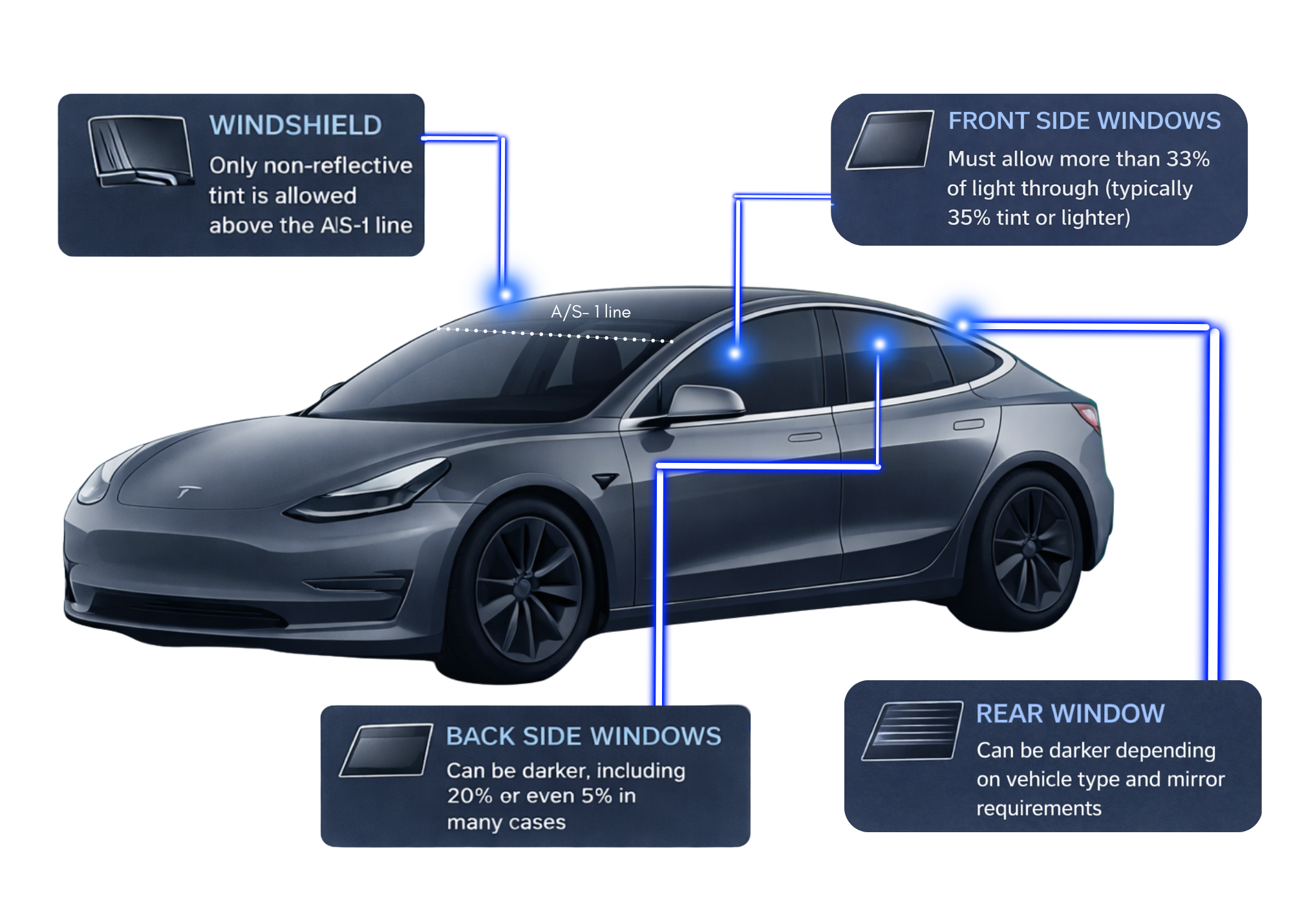
Keep in mind that laws can vary slightly depending on your vehicle and how tint is applied.
Choosing the right percentage isn’t just about looks—it’s about staying compliant and avoiding tickets.
Which Window Tint Percentage Should You Choose?
The right tint percentage depends on how you use your vehicle, how much visibility you want, and how important heat rejection is for you.
Here’s a simple way to decide:
For most drivers in Arizona, a combination works best—lighter tint on the front windows and darker tint on the rear.
After choosing the right legal tint, it’s important to maintain it properly. Learn how to clean tinted car windows without damaging the film.
How Much Does Tint Percentage Affect Cost?
Different tint levels and film types can impact pricing—especially when comparing standard tint to ceramic options.
See our full breakdown of window tinting cost in Glendale, AZ, including pricing ranges and what affects the final cost.
Frequently Asked Questions About Window Tint Percentage
Ready to Choose the Right Tint for Your Vehicle?
Now that you understand tint percentages, the next step is choosing the right film and setup for your specific vehicle and driving needs.
Explore our window tinting options for Phoenix West Valley drivers and find the right film and tint level for your vehicle.
Ready for a recommendation? Tell us about your vehicle below.